#52 Chinese Presence and Geopolitical Resilience in the Caribbean Parts of the Kingdom of the Netherlands

In short:
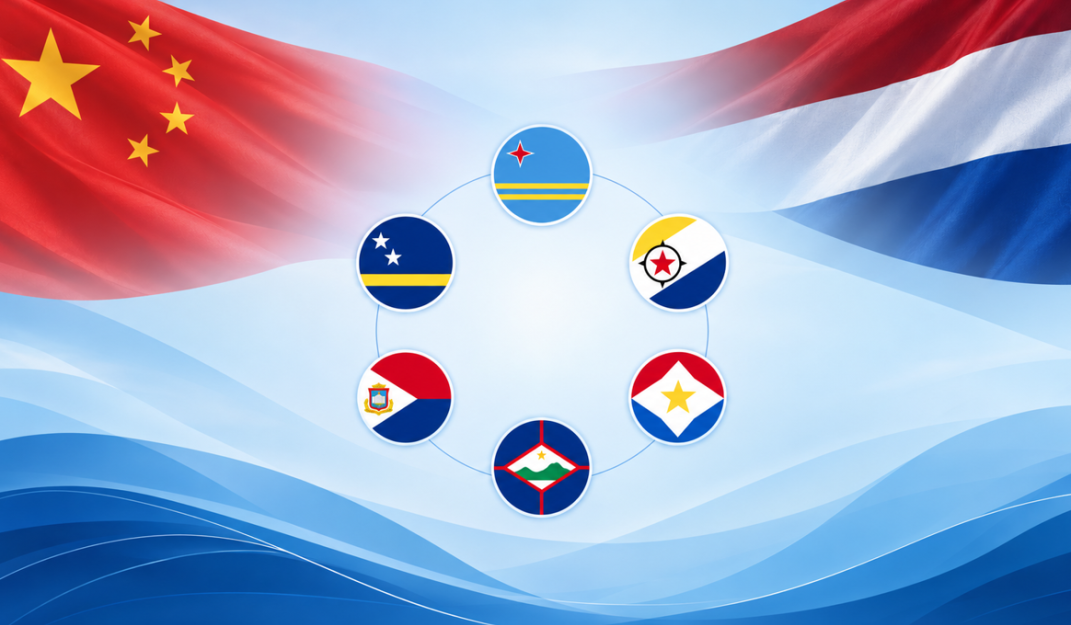
- Chinese presence has increased across the Caribbean Parts of the Kingdom of the Netherlands (CPKNL), but this should not be conflated with Chinese state influence, for which the report finds limited evidence.
- The main geopolitical vulnerabilities of the CPKNL stem from structural dependencies on external actors in areas such as imports, energy, digital infrastructure, logistics and security.
- The small scale and concentrated markets of the island economies mean that even limited foreign involvement can create dependencies in critical sectors.
- Strengthening geopolitical resilience requires closer cooperation within the Kingdom, reduced strategic dependencies, more resilient infrastructure and stronger coordination on economic security and geopolitical risks.
Summary
Political and policy attention in the Netherlands for China’s role in the Caribbean parts of the Kingdom of the Netherlands (CPKNL) has increased in recent years. Questions have emerged regarding foreign influence, critical infrastructure, economic dependency and geopolitical vulnerability in the region. Global geopolitical tensions, particularly between the United States and China, have contributed to growing concern about the strategic position of small island economies in the Caribbean basin.
This report examines the extent to which Chinese economic and political influence in the CPKNL has developed and how these developments relate to the geopolitical resilience and economic security of the islands. The research is based on qualitative fieldwork, interviews and desk research conducted between January and May 2026 across Aruba, Bonaire, Curaçao and Sint Maarten.
The report distinguishes explicitly between Chinese presence and Chinese state influence. Chinese presence refers broadly to the activities of diaspora communities, private entrepreneurs, companies, diplomatic representatives and state-linked actors. Chinese state influence refers specifically to the ability of the Chinese state and affiliated actors to shape political decision-making, governance practices or strategic economic choices within the CPKNL.
Chinese presence in the CPKNL has expanded over the past decades, primarily through migration, diaspora networks and private economic activity. Chinese-owned businesses have become more visible in the local economies, particularly in retail, supermarkets, restaurants, hospitality and small-scale commerce. More recently, Chinese companies have also participated in selected infrastructure, telecommunications and renewable energy projects.
At the same time, the report finds little evidence that Chinese state-led political influence in the CPKNL has increased substantially. Chinese state-linked investments and diplomatic activities in the CPKNL appear modest compared to other Caribbean countries. Political engagement by local Chinese communities also appears limited, while the islands themselves possess relatively limited strategic value for China in formal diplomatic terms.
Rather than approaching the region primarily through the lens of geopolitical rivalry, this report argues for a Charter-based long-term resilience-oriented approach that balances security considerations with local autonomy, economic development and regional stability. This includes improving coordination on economic security, strengthening digital and energy infrastructure, increasing institutional and financial investigative capacity, improving the exchange and analysis of information on cross-border financial flows and reducing concentrated external dependencies where feasible. Risk assessments should be conducted at country and public-entity level rather than treating the CPKNL as a single exposure category.
Watch the presentation and the interview with the authors here:
About the Authors
Raoul Bunskoek is Senior Research Fellow and Program Lead of the Clingendael China Centre at the Netherlands Institute of International Relations Clingendael in The Hague. He conducts research on China’s foreign policy and diplomacy, Chinese roles in international organisations (BRICS, SCO), China’s (international) political economy, and Chinese development thinking and practices abroad, particularly on the African continent.
Tobias Koster is a Researcher for the Clingendael China Centre at the Netherlands Institute of International Relations ‘Clingendael’ in The Hague. His research focuses on Chinese foreign policy and economic statecraft.
Simone van der Zee is a criminologist and senior researcher at Risk Solutions Caribbean in Curaçao. She previously worked for the Dutch National Police and the Kingdom Detective Cooperation Team (RST) in research, criminal investigations, intelligence and management positions. She specialises in crime assessments and research on organised crime, law enforcement and security in the Dutch Caribbean. She has lived and worked in all the six islands of the Dutch Caribbean for fourteen years.
Renske Pin is a behavioural scientist and founder and director of RE-Quest Caribbean, based in Curaçao. She has extensive experience in policy-oriented, academic and applied research across the Dutch Caribbean, with a focus on governance and societal issues. She previously worked as an associate professor at the University of Curaçao and as a researcher at TNO and serves on the NWO Programme Committee for Caribbean Research. She co-authored the 2022 CEDLA–UvA report China’s Economic and Political Role in the Caribbean and Central America.
Luc Alofs studied Cultural Anthropology at the Radboud University Nijmegen. He obtained a PhD in history at Leiden University. Alofs has been conducting research in Aruba and the Dutch Caribbean since 1985. Luc is senior researcher for the Aruba Institute for Good Governance and Leadership. He currently holds a CHECK co-chair in Small Island Slavery Studies and is co-applicant and co-promotor of the HERITOUR MSCA Doctoral Network at the University of Aruba.
Ellen Schepers is a Research Assistant at the Clingendael China Centre and Teaching Assistant at the KU Leuven Chinese Studies.

China Knowledge Network
The Dutch China Knowledge Network (CKN) is a network established to involve China experts and disseminate knowledge within the government of the Netherlands and beyond.Our key task is to connect various angles of research and events to better understand China’s motives, policies and vision to develop more effective policies and better advise social partners. The secretariat of the knowledge network has been assigned to think tank Clingendael together with LeidenAsiaCentre. They will function primarily as ‘knowledge brokers’, matching the supply and demand of knowledge.