
China Knowledge Network
The Dutch China Knowledge Network (CKN) is a network established to connect China experts and disseminate knowledge within the government of the Netherlands and beyond.
#52 Chinese Presence and Geopolitical Resilience in the Caribbean Parts of the Kingdom of the Netherlands


#51 Public Values of Chinese Digital Technologies and their Impacts on Europe
#50 China and Trade in Critical Raw Materials (CRMs): Understanding the means of exchange, control, and power amid heightened geopolitical tension
Latest Reports

Latest News and Events
Subscribe to the China Knowledge Network Newsletter
Stay in the loop with our latest reports, upcoming events and knowledge session invitations. You’ll receive:
Fresh insights from our latest research reports
Event alerts for CKN presentations, seminars and conferences
Invitations to knowledge sessions and CKN report presentations
Latest CKN Knowledge Sessions Recordings
China's Asymmetric Maritime behaviour
China has increasingly used a combination of naval, coastguard, civilian and paramilitary forces to advance and protect its maritime interests. Alongside the Chinese navy and coastguard, the maritime militia plays an important role, particularly in activities that fall below the threshold of open military confrontation. In recent years, these activities have become increasingly visible not only in the South China Sea, but also in the East China Sea. Dr. Benjamin Blandin examined the development of Chinese asymmetric maritime behaviour along the first island chain.The presentation explored the different means China employs to deny access, conduct hybrid operations and pursue its interests through so-called grey-zone tactics.
How China won over Africa
China has become Africa’s largest trading partner, a major investor in infrastructure and a key political partner for governments across the continent. From railways and ports to mining, manufacturing and digital infrastructure, China’s presence in Africa has expanded dramatically over the past two decades. Yet despite the scale of this engagement, many questions remain. Why has China been so successful in Africa? What has Beijing understood that others have not? And what lessons does Africa offer for policymakers, businesses and development practitioners seeking to engage with the continent?
Latest CKN Report Presentations
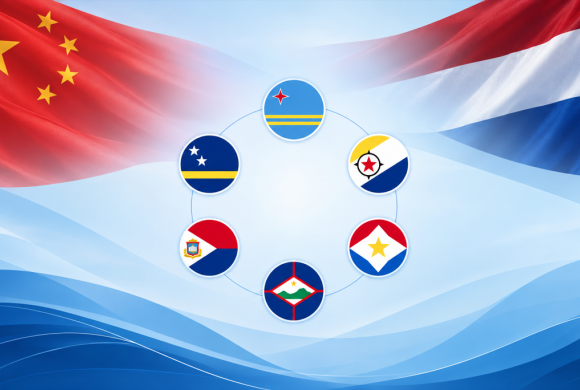
Chinese Presence and Geopolitical Resilience in the Caribbean Parts of the Kingdom of the Netherlands
Political and policy attention in the Netherlands for China’s role in the Caribbean parts of the Kingdom of the Netherlands (CPKNL) has increased in recent years. Questions have emerged regarding foreign influence, critical infrastructure, economic dependency and geopolitical vulnerability in the region.This report examines the extent to which Chinese economic and political influence in the CPKNL has developed and how these development relate to the geopolitical resilience and economic security of the islands.
Public Values of Chinese Digital Technologies and their Impacts on Europe
Chinese digital technologies are becoming an increasingly visible part of everyday life in Europe. From social media platforms like TikTok and ecommerce giants like Shein, to BYD vehicles and Chinese open-source AI models, technologies developed in China are reaching European consumers on an unprecedented scale. Yet while awareness of the opportunities and challenges posed by digital technologies has grown, the contexts that shape Chinese approaches to technology remain poorly understood.
Latest CKN Interviews
Dr Benjamin Blandin on China's asymmetric maritime behaviour
Benjamin Blandin has been working as a consultant in strategy and innovation for 15 years in both industry and consulting firms. He holds an MA in strategy consulting from EM Lyon (France), an MA in Geopolitics from the French Institute of Geopolitics and graduated from the Paris Military Academy (maritime strategy program). Benjamin has earned a Ph.D. from the Paris Catholic University in geopolitics focusing on the phenomena of AZAD, hybrid warfare and grey area tactics in the South China Sea.
CKN Interview | Raoul Bunskoek, Renske Pins & Simone van der Zee
Raoul Bunskoek is Senior Research Fellow and Program Lead of the Clingendael China Centre at the Netherlands Institute of International Relations Clingendael in The Hague.
Simone van der Zee is a criminologist and senior researcher at Risk Solutions Caribbean in Curaçao.
Renske Pin is a behavioural scientist and founder and director of RE-Quest Caribbean, based in Curaçao.